
Hanoi is at its most honest before seven in the morning. Around Hoan Kiem Lake, groups of women dance to music from a small speaker, older men stretch beneath the banyan trees, and a few runners circle the water past the red Huc Bridge. Nobody is performing for visitors. This is simply how the city starts its day.
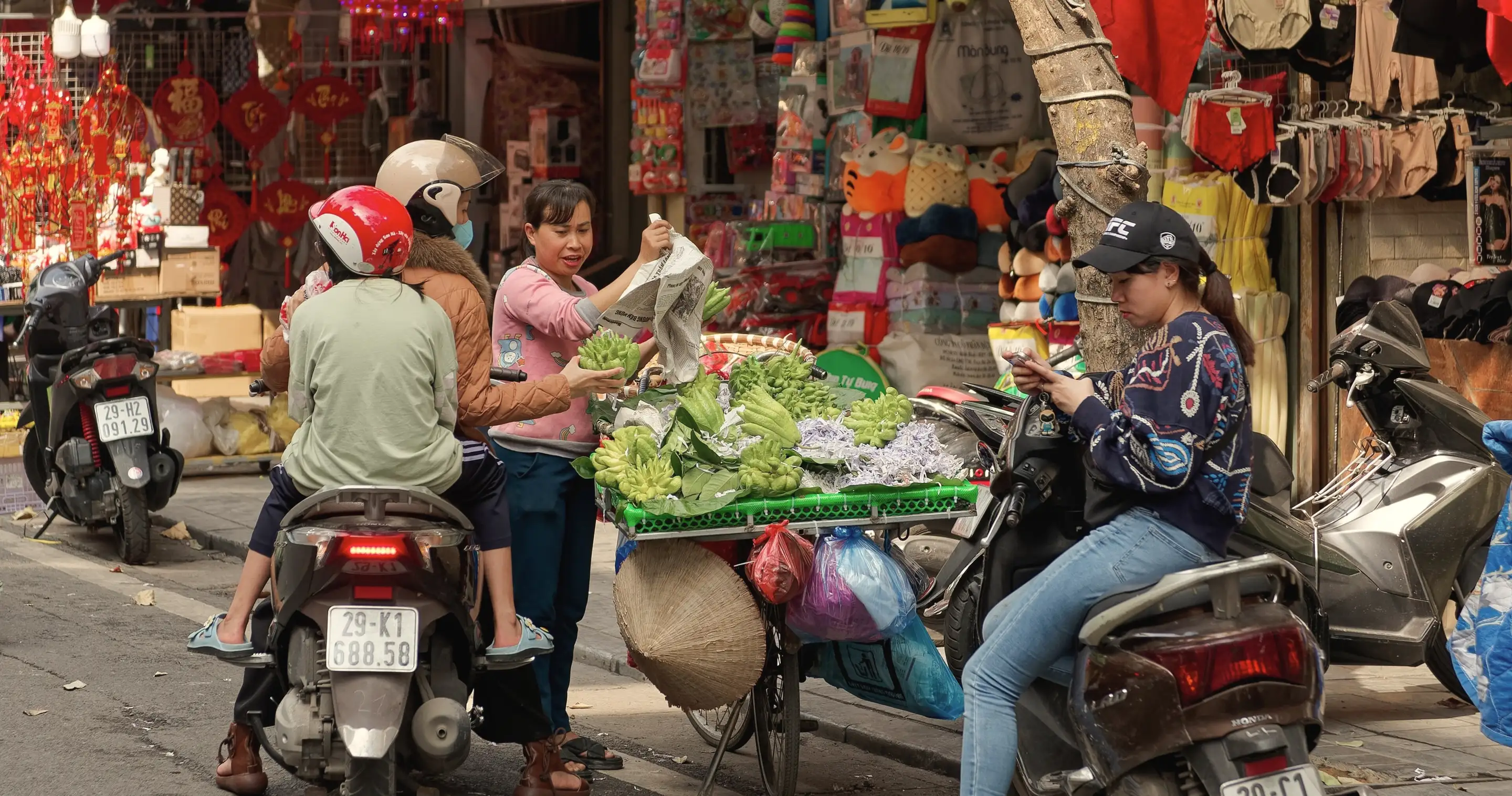
A few streets away, the Old Quarter is opening its shutters. Each lane once belonged to a single trade, and the names still say so: Hang Bac for silver, Hang Ma for paper goods, Hang Thiec for tin. Breakfast is pho or bun cha, eaten on low plastic stools at the edge of the pavement, and the best stalls are often the ones with no sign at all.
By mid-morning we walk to the Temple of Literature, founded in 1070 and later home to Vietnam's first national university. Stone stelae carried on the backs of tortoises record the names of scholars who passed the royal examinations. Students still come here before their exams, quietly, to ask for luck.
We plan Hanoi days around this rhythm: the lake at first light, a long lunch through the heat of the day, and the evening for a water puppet performance or a quiet dinner in a restored French villa. The city rewards those who slow down enough to notice it.