
After nearly 5,000 kilometres through six countries, the Mekong divides into many branches as it reaches the sea in southern Vietnam. The land between them is one of the most fertile regions in Asia: a patchwork of rice fields, fruit orchards and villages connected by thousands of canals.
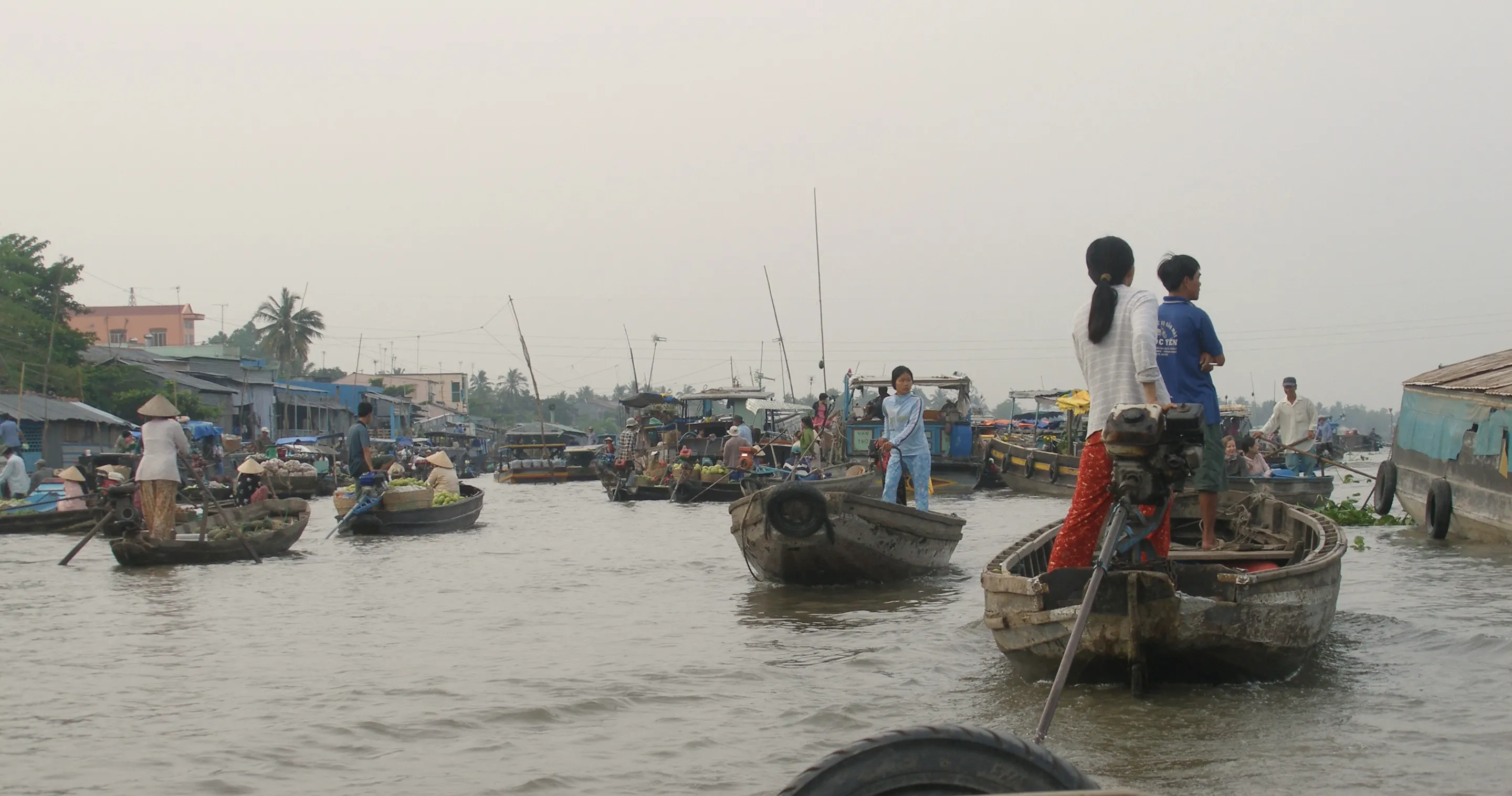
The floating markets are the delta's most famous sight. At Cai Rang, near Can Tho, wholesalers anchor their boats in the river and hang a sample of what they sell from a tall pole: a pumpkin, a bunch of bananas, a cabbage. Smaller boats move between them, buying for shops and restaurants on land. Trading starts before dawn and is mostly over by mid-morning.
Away from the markets, we travel by sampan through narrow canals shaded by water coconut palms. Families make rice paper, coconut candy and puffed rice in their homes, and orchards of pomelo, durian and longan grow right up to the water's edge. Lunch is often an elephant ear fish, served whole, at a family table.
Evenings in the delta are quiet. We stay in riverside lodges or a restored heritage house, where the only sounds after dark are boat engines in the distance and frogs in the rice fields. It is a gentle counterpoint to the energy of Saigon, only a few hours away.