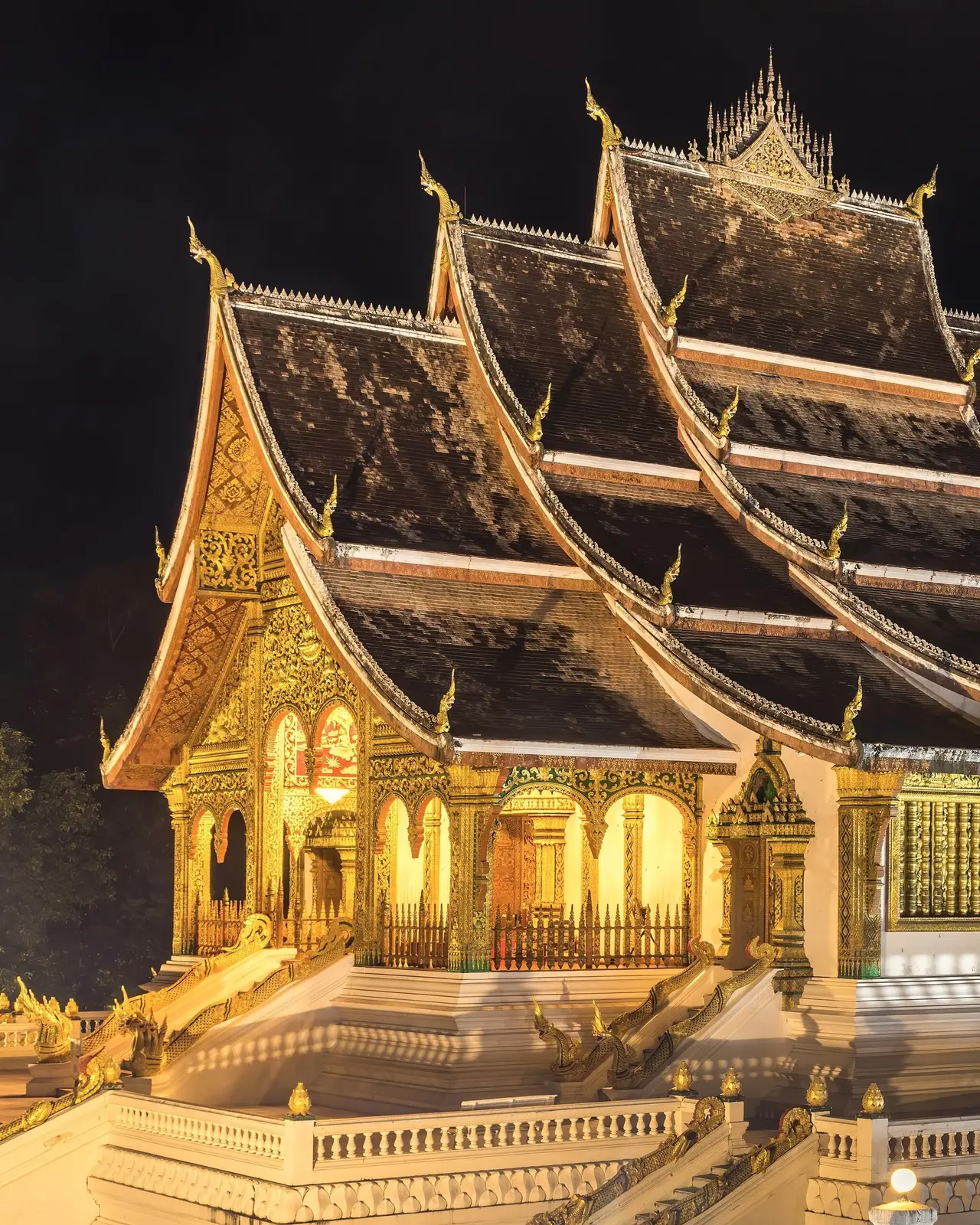

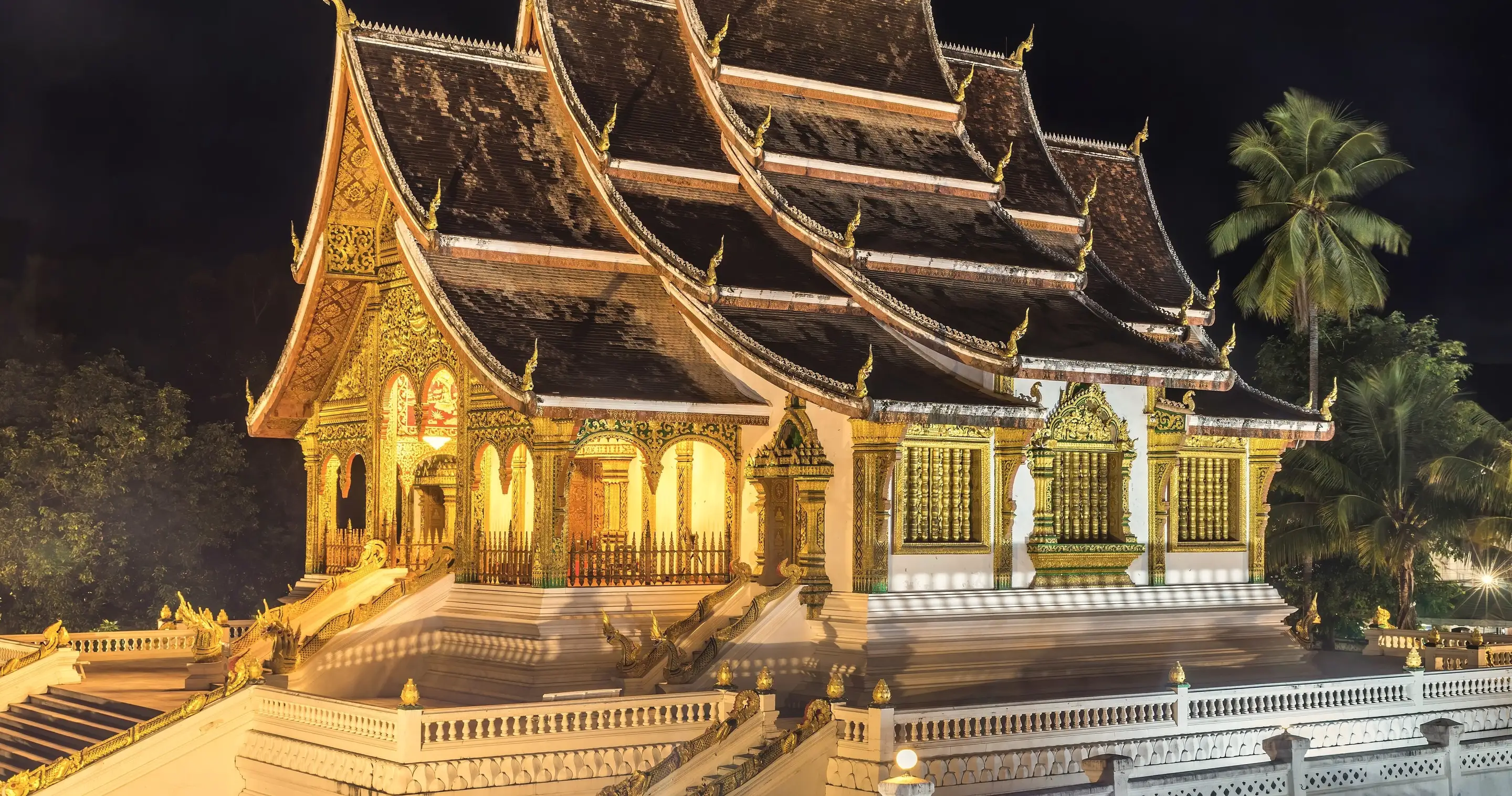
Luang Prabang sits on a narrow peninsula where the Nam Khan river meets the Mekong. It was the royal capital of the kingdom of Lan Xang and remained the seat of the Lao kings until 1975. Today it is a small town of around thirty monasteries, French colonial villas and wooden houses, protected as a whole by UNESCO.
Each morning at dawn, monks in saffron robes walk in silent lines through the streets to receive alms of sticky rice from residents kneeling along the pavement. It is a religious ritual, not a show, and we explain how to watch it respectfully: from a distance, without flash, and taking part only if you wish to and in the proper way.
Wat Xieng Thong, built in 1560, is the town's most beautiful temple, its roofs sweeping almost to the ground and its walls decorated with glass mosaics. The former Royal Palace, now a museum, holds the Phra Bang, the golden Buddha that gave the town its name. At sunset, steps lead up Mount Phousi for a view over the rivers and the temple roofs.
Beyond the town, the turquoise pools of the Kuang Si waterfall are an easy morning's drive, and boats travel upriver to the Pak Ou caves, filled with thousands of Buddha statues. But Luang Prabang is above all a place to slow down, and we leave long afternoons free for exactly that.