

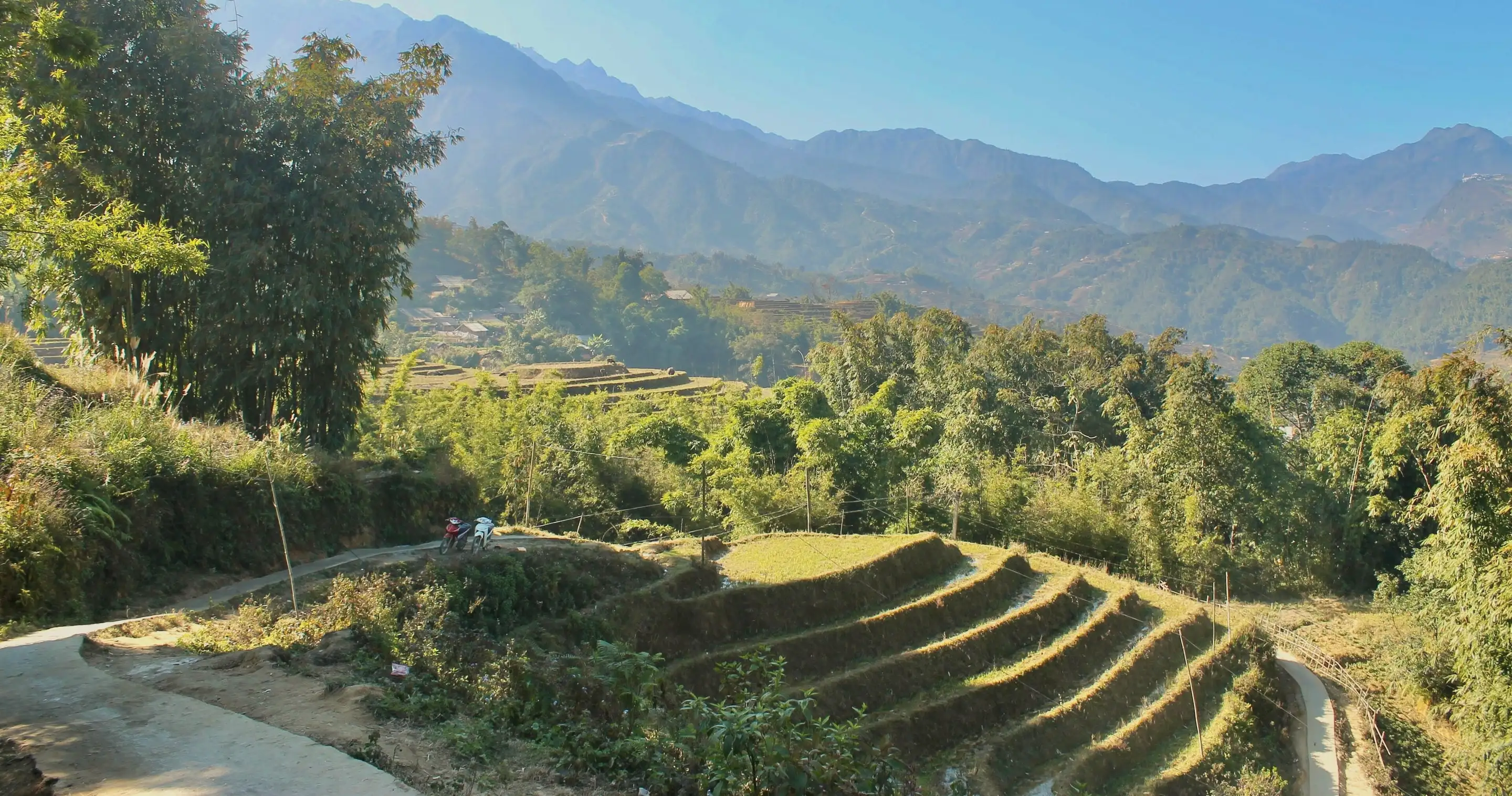
Sapa sits high in the Hoang Lien Son range, close to Fansipan, the highest peak in Indochina. The French built a hill station here in the early twentieth century to escape the summer heat of the delta. Long before that, the valleys were home to Black Hmong, Red Dao, Tay and Giay communities, who still farm the slopes today.
The rice terraces are the landscape's great work of patience. Carved by hand and watered by bamboo channels, they change colour with the seasons: silver with water in spring, bright green in summer and gold just before the harvest in September. Walking along their edges is the best way to see them, on paths that link one village to the next.
We walk with guides from the villages themselves, many of them Hmong women who grew up on these paths. They explain the indigo dyeing that colours their clothes, the embroidery passed down from mother to daughter, and the market days when families come down from the hills to trade.
Mist arrives quickly in Sapa and can hide the valley within minutes, then lift just as fast. We plan walks at a gentle pace with time to wait for the view, and stay in lodges where the evening ends with a fire, a local rice wine and a valley full of stars.